
Nepali to English NAATI Translations – What New Migrants Need to Know
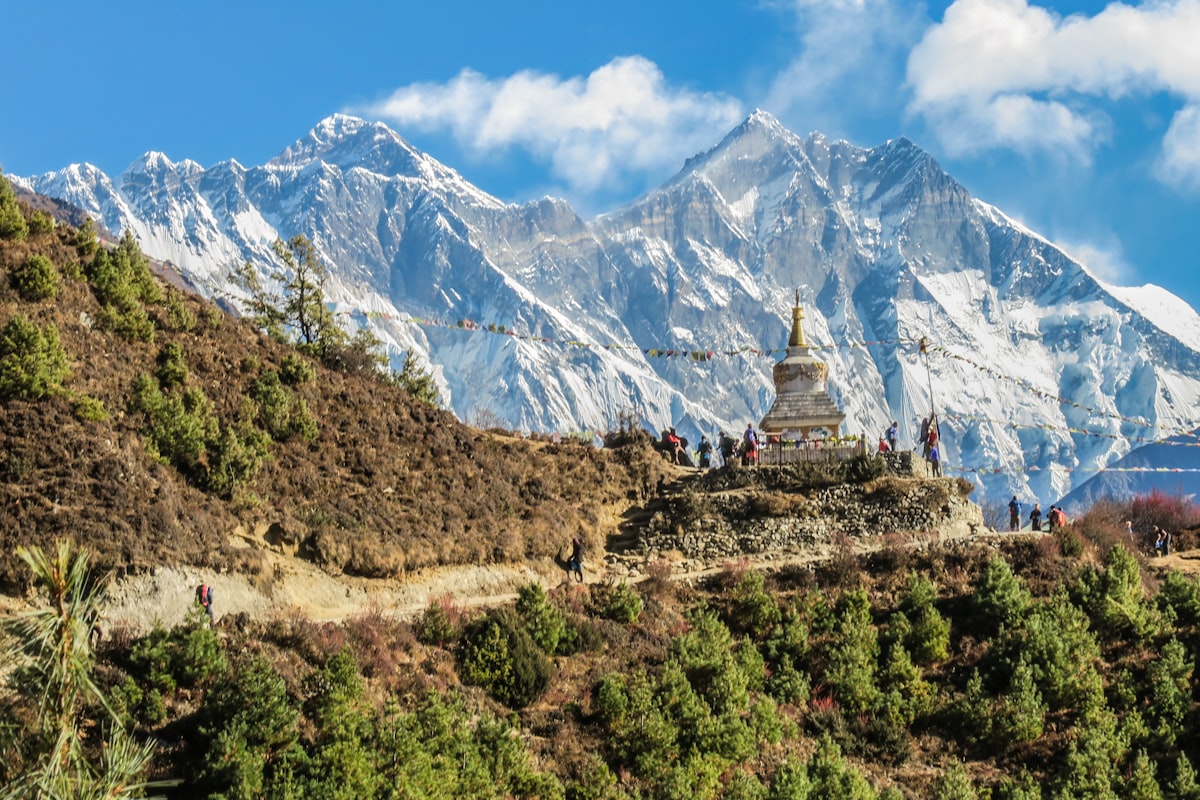
Nepal's population in Australia has more than doubled in the past decade, making Nepali one of the fastest-growing language communities in the country. With thousands of Nepali nationals arriving each year on skilled visas, student visas, and family reunification pathways, the demand for accurate document translation has never been higher. But Nepali documents come with their own set of complications that many people only discover when an application hits a snag.
Dates in Bikram Sambat that do not match the Gregorian calendar. Devanagari script that requires specialist knowledge to translate precisely. District-level issuing offices with inconsistent formatting. These are the kinds of details that can cause processing delays if a translator is not familiar with Nepal's administrative systems.
This guide explains which Nepali documents Australian authorities most commonly request, how Nepal's civil registration works, and what to expect when arranging a NAATI certified Nepali to English translation.
Why NAATI Certification Is Needed for Nepali Documents
NAATI stands for the National Accreditation Authority for Translators and Interpreters. It is the only body in Australia that assesses and certifies translators against a nationally recognised benchmark. When the Department of Home Affairs, a university enrolment office, or a health practitioner registration board asks for a "certified translation," they specifically mean one produced under NAATI credentials.
A translation completed by a bilingual relative, a Nepal-based notary public, or an automated online tool does not satisfy this requirement. The NAATI practitioner number and certification stamp serve as verification that a qualified professional has confirmed the accuracy of the English text against the Nepali source document.
This standard applies whether you are submitting a जन्मदर्ता प्रमाणपत्र (birth certificate) for a family visa, a शैक्षिक प्रमाणपत्र (academic certificate) for skills assessment, or a सवारी चालक अनुमतिपत्र (driving licence) for state road authority conversion. If the receiving body operates within Australia, NAATI certification is the standard they expect.
Understanding Nepal's Civil Registration System
Nepal's civil registration framework has undergone significant changes over the past two decades. Vital events such as births, marriages, deaths, and divorces are registered through local government bodies - historically the Village Development Committee (गाउँ विकास समिति) or Municipality (नगरपालिका), and now the ward offices of the restructured local governments following Nepal's 2015 Constitution and the shift to a federal system.
One of the most distinctive features of Nepali documentation is the use of the Bikram Sambat (BS) calendar. Unlike most countries that use the Gregorian calendar for official records, Nepal's government documents display dates exclusively in BS format, which runs approximately 56 to 57 years ahead. A document dated 2081/04/15 BS, for example, corresponds to a date in July or August 2024 AD. Every date on every Nepali document must be converted accurately during translation.
Additionally, Nepali documents are written in Devanagari script. While this is a widely recognised writing system also used for Hindi and Sanskrit, the Nepali administrative vocabulary and naming conventions differ substantially, and translators must be fluent in Nepali-specific terminology rather than relying on Hindi knowledge alone.
Birth Certificate - जन्मदर्ता प्रमाणपत्र
Nepali birth certificates are issued by the local ward office where the birth was registered. They record the child's full name, date of birth (in BS), place of birth, and the names of both parents. Older certificates may also include the grandfather's name, which is a convention in Nepali naming traditions where the family lineage is traced through the paternal line.
A common challenge with Nepali birth certificates is that registration was not always completed at the time of birth, particularly in rural areas. Late registrations sometimes introduce discrepancies between the actual date of birth and the registered date. These inconsistencies must be faithfully reflected in the translation, and a NAATI certified translator will note any such discrepancy for the receiving authority.
Side-by-Side Example - जन्मदर्ता प्रमाणपत्र
Nepali Original:
नाम: राजेश अधिकारी
जन्म मिति: २०४९/०८/१२
जन्मस्थान: काठमाडौं महानगरपालिका
बाबुको नाम: सुरेश अधिकारी
आमाको नाम: सरिता अधिकारी
English Translation:
Full Name: Rajesh Adhikari
Date of Birth: 12/08/2049 BS (27 November 1992 AD)
Place of Birth: Kathmandu Metropolitan City
Father's Name: Suresh Adhikari
Mother's Name: Sarita Adhikari
Translation Considerations
Nepali names do not follow the Western first name-surname pattern uniformly. Many Nepalis use a given name followed by a family name, but others include middle names, titles, or caste-based names that function differently in an Australian context. A NAATI certified translator ensures the name is rendered to match the applicant's passport spelling, and clarifies any components that may cause confusion for Australian officials.
Marriage Certificate - विवाह दर्ता प्रमाणपत्र
Marriage registration in Nepal is handled by the local ward office. The marriage certificate records the names of both spouses, their dates of birth, the date of marriage (in BS), and details of the witnesses. Nepal legally recognises marriages from the age of 20 (or 18 with parental consent), and the certificate must be formally registered regardless of whether a religious or cultural ceremony took place.
One aspect of Nepali marriage documentation that often requires contextual explanation is the tradition of women adopting their husband's surname after marriage. While this is common practice, it is not legally mandatory, and some women retain their birth surname. This can result in name discrepancies across documents - a woman's birth certificate may show one surname while her marriage certificate and passport show another. A skilled translator will address these variations clearly.
Side-by-Side Example - विवाह दर्ता प्रमाणपत्र
Nepali Original:
दुलहाको नाम: राजेश अधिकारी
दुलहीको नाम: सुनिता शर्मा
विवाह मिति: २०७५/१०/२५
दर्ता मिति: २०७५/११/०३
दर्ता स्थान: ललितपुर महानगरपालिका
English Translation:
Groom's Name: Rajesh Adhikari
Bride's Name: Sunita Sharma
Date of Marriage: 25/10/2075 BS (7 February 2019 AD)
Date of Registration: 03/11/2075 BS (15 February 2019 AD)
Place of Registration: Lalitpur Metropolitan City
Police Clearance Certificate - चारित्रिक प्रमाणपत्र
The Nepali police clearance certificate, known as the चारित्रिक प्रमाणपत्र (Character Certificate), is issued by the Nepal Police Headquarters in Kathmandu or through district police offices. For Nepalis living overseas, applications can be submitted through the nearest Nepali embassy or consulate.
The certificate confirms whether the applicant has any criminal convictions recorded in Nepal. It is a mandatory requirement for Australian visa character assessments under the Migration Act. The document typically includes the applicant's full name, date of birth (in BS), citizenship number, and the clearance status. Some older versions may include a photograph and fingerprint record.
Side-by-Side Example - चारित्रिक प्रमाणपत्र
Nepali Original:
चारित्रिक प्रमाणपत्र
नाम: राजेश अधिकारी
नागरिकता नं: ४५-०१-७८-१२३४५
विवरण: कुनै अपराधिक अभिलेख फेला परेन
English Translation:
Character Certificate (Police Clearance)
Full Name: Rajesh Adhikari
Citizenship No.: 45-01-78-12345
Result: No criminal record found
Citizenship Number
The Nepali citizenship number (नागरिकता नम्बर) is a unique identifier assigned to every Nepali citizen when they receive their citizenship certificate, typically at age 16. This number appears on nearly all official Nepali documents and functions as the primary identity reference. Unlike an Australian TFN or driver's licence number, there is no direct equivalent, so translators should note its purpose for Australian officials.
Academic Qualifications and Transcripts
Nepal's education system follows a structure that has been reformed several times. The key levels are the School Leaving Certificate (SLC) or now the Secondary Education Examination (SEE) at Grade 10, Higher Secondary (+2) at Grade 12, and then Bachelor's, Master's, and doctoral degrees at the university level. The primary examining bodies are the National Examinations Board (राष्ट्रिय परीक्षा बोर्ड) for school-level qualifications and individual universities such as Tribhuvan University, Kathmandu University, and Pokhara University.
A recurring issue with Nepali academic documents is the grading system. Older SLC certificates use a percentage and division system (First Division, Second Division, Third Division), while newer transcripts may use a GPA scale. Vocational qualifications issued by the Council for Technical Education and Vocational Training (प्राविधिक शिक्षा तथा व्यावसायिक तालिम परिषद्, or CTEVT) follow yet another structure. Translating these accurately matters for skills assessment bodies like VETASSESS, which must map Nepali qualifications against the Australian Qualifications Framework.
Side-by-Side Example - Academic Record
Nepali Original:
प्रमाणपत्र: स्नातक (Bachelor)
विषय: व्यापार अध्ययन
विश्वविद्यालय: त्रिभुवन विश्वविद्यालय
उपाधि: व्यापार शास्त्र स्नातक (BBS)
उत्तीर्ण मिति: २०७६/०३/१५
English Translation:
Certificate: Bachelor's Degree
Subject: Business Studies
University: Tribhuvan University
Degree: Bachelor of Business Studies (BBS)
Date of Completion: 15/03/2076 BS (29 June 2019 AD)
Driving Licence - सवारी चालक अनुमतिपत्र
Nepali driving licences are issued by the Department of Transport Management (यातायात व्यवस्था विभाग). The licence categories differ from Australian equivalents: Category A covers motorcycles, Category B covers cars and jeeps, Category C covers trucks and heavy vehicles, and there are additional categories for public transport vehicles. The smart card format introduced in recent years includes both Nepali and English text, but older paper-based licences are entirely in Devanagari and require full translation.
After arriving in Australia, Nepali licence holders can generally drive on their overseas licence for a limited period, typically three to six months depending on the state. After that, conversion to a local licence is mandatory. In New South Wales, this is handled through Transport for NSW. In Victoria, through VicRoads. In Queensland, through the Department of Transport and Main Roads. Each state requires a NAATI certified translation of the licence as part of the conversion process.
Side-by-Side Example - सवारी चालक अनुमतिपत्र
Nepali Original:
सवारी चालक अनुमतिपत्र
नाम: राजेश अधिकारी
श्रेणी: B (कार/जीप)
अनुमतिपत्र नं: ०५-१८-००१२३४५
जारी मिति: २०७३/०५/१०
English Translation:
Driving Licence
Full Name: Rajesh Adhikari
Category: B (Car/Jeep)
Licence No.: 05-18-0012345
Date of Issue: 10/05/2073 BS (26 August 2016 AD)
Devanagari Script and Bikram Sambat Calendar Challenges
Nepali uses the Devanagari script, which is also the writing system for Hindi, Marathi, and Sanskrit. However, Nepali has its own distinct vocabulary, grammatical structures, and administrative terminology. A translator who works primarily with Hindi may misinterpret Nepali-specific terms, particularly in legal and governmental contexts where the two languages diverge significantly.
The Bikram Sambat calendar is the official calendar of Nepal, and it presents a unique challenge that does not arise with documents from most other countries. The BS year currently runs roughly 56 to 57 years ahead of the Gregorian year, but the conversion is not a simple subtraction. BS months do not align neatly with Gregorian months, and the number of days in each BS month varies from year to year. Accurate date conversion requires reference tables or specialised knowledge, and errors in date conversion are one of the most common reasons Nepali document translations are queried by Australian authorities.
Bikram Sambat Date Conversion
Every date on a Nepali document must be converted from Bikram Sambat to the Gregorian calendar. For example, 2081/04/15 BS corresponds to approximately 30 July 2024 AD. Because BS months have irregular day counts and do not map directly onto Gregorian months, this conversion requires precision. A NAATI certified translator experienced with Nepali documents will handle these conversions as standard practice.
Other Documents Nepali Speakers Commonly Need Translated
In addition to the core civil, police, academic, and driving documents, Nepali migrants frequently require translations of the following:
- नागरिकता प्रमाणपत्र (Citizenship Certificate) - This is Nepal's primary identity document, issued to citizens at age 16. It records the holder's name, date of birth, permanent address, and photograph. It is often requested alongside a birth certificate to establish identity for visa applications.
- सम्बन्ध विच्छेद प्रमाणपत्र (Divorce Certificate) - Required for partner visa applications where either party has been previously married. Nepali divorces are processed through the court system, and the resulting certificate includes specific legal terminology that requires careful translation.
- मृत्यु दर्ता प्रमाणपत्र (Death Certificate) - Needed in situations involving inheritance claims, pension transfers, or dependent visa applications where a family member is deceased.
- कर चुक्ता प्रमाणपत्र (Tax Clearance Certificate) - Sometimes required for business visa applications or to demonstrate financial standing. Issued by the Inland Revenue Department of Nepal.
- अनुभव पत्र (Employment Reference Letter) - Frequently needed for skilled migration applications. Nepali employment letters often follow a different format and include details that must be restructured for Australian skills assessment bodies.
Getting Your Nepali Documents Translated
The entire process can be completed online - there is no need to visit an office or post your original documents.
- Scan or photograph your document clearly. Ensure all text, stamps, seals, and any handwritten annotations are legible. Nepali government documents often include embossed seals and watermarks that may not reproduce well in low-quality scans.
- Upload through a translation service. Submit the file through a NAATI certified translation provider and select the service level that suits your timeline.
- A NAATI certified translator completes the work. The translator produces the English version, certifies it, and includes their NAATI practitioner number and stamp.
- Receive the finished translation digitally. The certified translation is delivered as a PDF. Australian government agencies and institutions broadly accept digitally delivered NAATI certified translations.
Digital Delivery Is Widely Accepted
The Department of Home Affairs accepts PDF uploads via ImmiAccount, and universities and skills assessment bodies are equally comfortable with digital certified translations. Hard copies are only necessary if an organisation specifically requests them. For further detail, see our guide on digital versus hard copy NAATI translations.
What Does a Nepali to English Translation Cost?
Pricing varies based on the service tier and the complexity of the source document. Here is a summary:
| Service Level | Price From | Indicative Turnaround |
|---|---|---|
| Self-Service Extract | $44.95 | From 1 hour |
| Extract Translation | $59.95 | 1 business day |
| Full Translation | $64.95 | 1-2 business days |
Turnaround times are indicative and are not guaranteed. Documents with extensive handwritten content, multiple pages, or complex legal terminology may require additional time.
When comparing providers, verify that the price includes NAATI certification, that digital delivery is standard, and that the translator has practical experience with Nepali civil, legal, and academic documentation. For a full breakdown, visit our pricing page.
Mistakes That Delay Nepali Document Applications
These are the issues that arise most frequently with Nepali-language submissions:
- Incorrect date conversion. Bikram Sambat to Gregorian conversion errors are the single most common problem. A date that is even one day off can trigger queries from Australian authorities and delay processing.
- Name spelling mismatches. Nepali names can be romanised in multiple ways. अधिकारी may appear as Adhikari, Adhikary, or Adhikarii depending on the document. The translator must match the passport spelling and note any discrepancies.
- Using a Hindi translator instead of a Nepali translator. While both languages use Devanagari, Nepali administrative and legal terminology differs from Hindi. A translator without Nepali-specific expertise may misinterpret key terms.
- Submitting untranslated citizenship certificates. The नागरिकता प्रमाणपत्र is often needed alongside other documents, but applicants sometimes forget to include it or assume it is not required. Australian authorities may request it as additional identity verification.
- Poor quality scans of older documents. Handwritten ward office records from rural Nepal can be difficult to read even in the original. High-resolution scanning is essential to ensure every character is legible for translation.
Frequently Asked Questions
Do I need a NAATI certified translation for a Nepali birth certificate?
For submissions to Australian government agencies, universities, and professional registration bodies, a NAATI certified translation is typically what is required. Uncertified translations are generally not accepted for official purposes.
What is the Bikram Sambat calendar and why does it matter?
The Bikram Sambat (BS) calendar is Nepal's official calendar, running approximately 56 to 57 years ahead of the Gregorian calendar. All Nepali government documents use BS dates, so accurate conversion to Gregorian dates is essential for Australian authorities to process your documents correctly.
Can a Hindi translator handle Nepali documents?
While both languages use Devanagari script, Nepali has its own vocabulary, grammar, and administrative terminology. A translator must be specifically certified in Nepali by NAATI to produce a valid certified translation. Hindi certification does not cover Nepali.
Does the Department of Home Affairs accept digital translations?
Yes. Certified translations in PDF format can be uploaded directly through ImmiAccount. Physical copies are not usually required unless a specific organisation states otherwise.
What is a Nepali citizenship certificate and do I need it translated?
The नागरिकता प्रमाणपत्र is Nepal's primary identity document, issued to citizens at age 16. It is frequently requested by Australian authorities as supplementary identity evidence alongside birth certificates and passports. Having it translated in advance can prevent delays.
Need a Nepali Document Translated?
From a single citizenship certificate to a full package of documents for a skilled worker visa, getting started is straightforward. Upload a clear scan and receive your NAATI certified translation in as little as one hour for extract services. Our simple online process provides a complete overview of service tiers and turnaround times.
About the Author
Suman Adhikari
NAATI Certified Nepali-English Translator | Devanagari Script and Migration Document Specialist
Suman is a NAATI certified Nepali-English translator with six years' experience in Devanagari script documents and Bikram Sambat calendar conversion. He holds a Master of Translation and Interpreting from Western Sydney University.